

.png?width=250&height=206&name=Meggsius%20Control%20icon%20-%20Vencomatic%20Group%20(def).png)
.png?width=250&height=206&name=Meggsius%20Count%20icon%20-%20Vencomatic%20Group%20(def).png)
.png?width=250&height=206&name=Meggsius%20Detect%20icon%20-%20Vencomatic%20Group%20(def).png)
.png?width=250&height=206&name=Meggsius%20Select%20icon%20-%20Vencomatic%20Group%20(def).png)

.png?width=250&height=206&name=Meggsius%20Connect%20icon%20-%20Vencomatic%20Group%20(def).png)
.png?width=160&height=132&name=Egg%20packers%20-%20Vencomatic%20Group%20(2).png)
.png?width=160&height=132&name=Meggsius%20Select%20-%20Vencomatic%20Group%20(2).png)




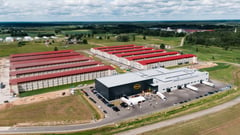
South Korea – For Haemil Buyeo farm in South Korea, the transition to cage free egg production started with a clear question: how can we produce high-quality eggs and delivering them safely to consumers.
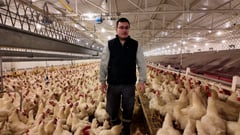
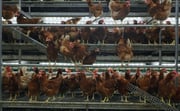
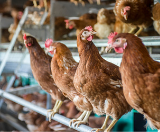
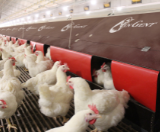
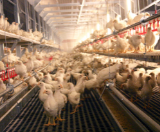
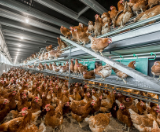
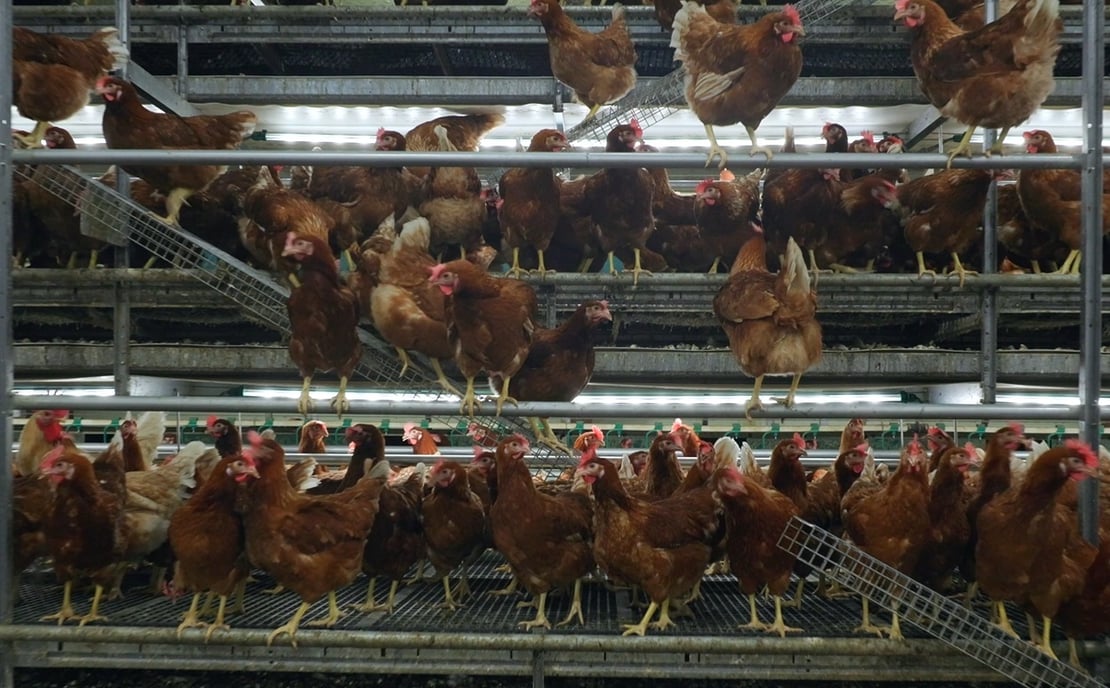
Today, the farm houses approximately 45,000 laying hens in a cage-free aviary system. A willingness to explore new approaches has helped the company develop a farm built around bird behaviour, practical management and efficient egg handling.
Designing the house around natural bird behaviour
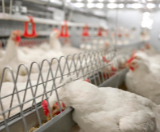
Haemil Buyeo chose the Bolegg Gallery aviary system. Its open, multi-tier design allows hens to move between different levels and supports behaviours such as jumping, perching and flying. Haeng-soon Jung, CEO of Haemil Buyeo, explains what this means to her:
“When I enter the poultry house and see the hens jumping and flying, I can see that they are comfortable. That gives me a good feeling. The design of the system encourages the birds to stay active.”
The layout was selected not only with the hens in mind. Good visibility, accessibility and automated processes also help employees work comfortably and manage the flock efficiently.
A smooth transition starts during rearing
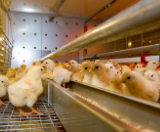
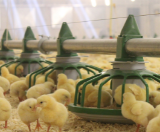
One of the practical concerns when moving to cage-free housing is the number of eggs laid outside the nest. At Haemil Buyeo, floor eggs are reported to be minimal. An important part of this result begins before the hens enter the laying house. During rearing, the pullets learn to move between different levels and find feed, water, perches and nests. Because they develop these skills early, they can adapt more easily when transferred to the production house. Early training and consistent flock management are essential parts of a successful transition.
Automation that supports the people on the farm
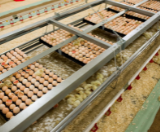
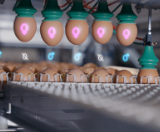
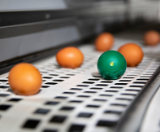
Egg collection and packing are automated using Prinzen equipment. This reduces the amount of manual handling required and allows the farm to operate with fewer labour-intensive steps. For employees, automation also makes the daily work more manageable. Haemil Buyeo’s experience challenges the assumption that giving hens more freedom must come at the expense of production. Haeng-soon Jung:
“The idea that animal welfare reduces production is a misconception. Productivity can remain high when the birds feel comfortable in a low-stress environment. Vencomatics’ solution proves that animal welfare and high productivity can go hand in hand, and is the finest result of our collaboration”
A stable climate throughout the seasons
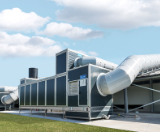
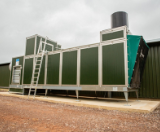
To manage the indoor climate, the farm uses ECO Unit heat exchangers. The units use heat from outgoing house air to preheat incoming fresh air. According to Haemil Buyeo, this helps maintain a more consistent indoor temperature throughout the year while supplying fresh air and limiting energy use. The farm also experiences less odour around the poultry houses.
Climate control is therefore more than a matter of temperature. It contributes to a comfortable environment for the flock, supports working conditions inside the house and helps reduce the farm’s impact on its surroundings.
Looking towards the future of egg production
Haemil Buyeo’s ambition reaches beyond its own farm. The company wants to deliver high-quality eggs safely to consumers while showing a new generation what modern poultry farming can become. Haeng-soon Jung:
“Livestock farming is no longer only a primary industry. It is becoming a forward-looking sector in which IT, data and biotechnology come together. I hope our farm can inspire young people to take part in the future of the poultry industry and approach that opportunity with confidence.”
This content requires cookies to be enabled.